My simulation has diverged twice between where the wheel meets the ground. I know this is often a very common place for divergences but between my last simulation and my current simulation nothing has changed in or around any of the wheels. For the first run I did change my overall mesh fineness from 3.8 on the previous simulation to 3.0 on the first run and it failed near the front wheel. When I moved it back up to 3.8 it then lasted slightly longer and failed near the rear wheel.
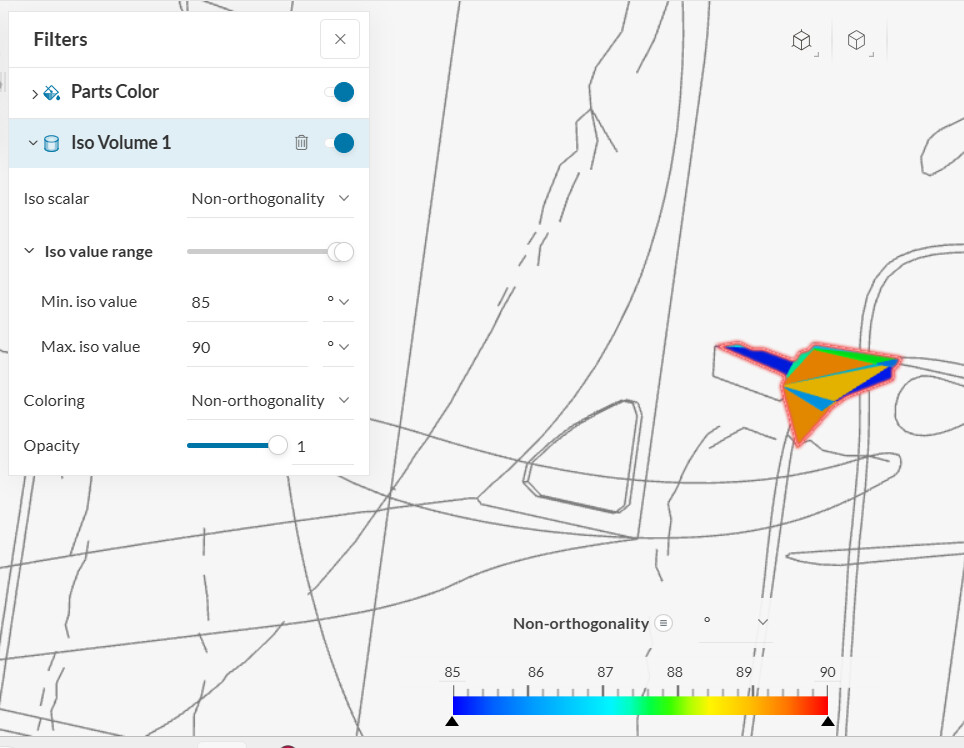
The non-orthogonality cells outside of acceptable limit do exist which might be one of the reasons. Consider improving the mesh quality further with additional refinements around the areas.
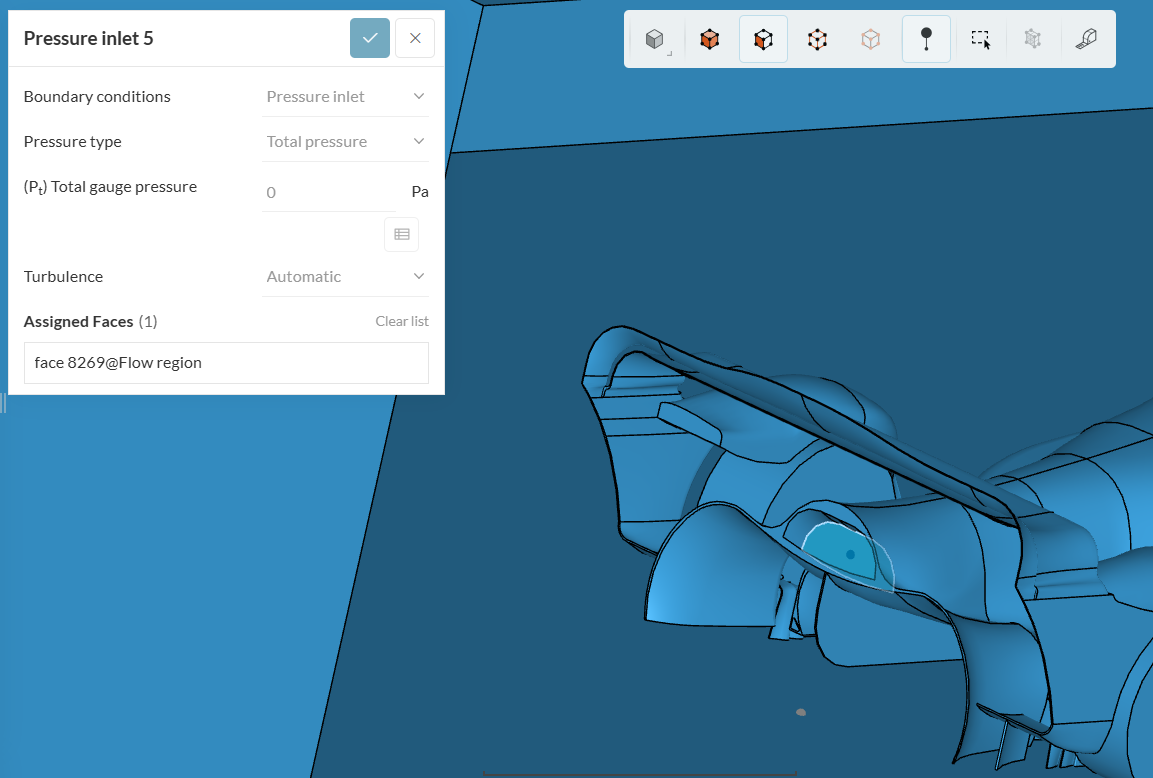
You are also using a pressure inlet condition at the back of the car of 0 Pa. Is this intended? This would be considered as a pressure inlet into the fluid domain at that point of the domain where the pressure would definitely be non-zero because of drag induced because of flow around the car. This can also lead to divergence
The pressure inlet is intentional here. I am using it to roughly simulate the effect of cooling air exiting the car. Also the photo you provided was of the version I was comparing to. HP3 V12 is the version where the simulation did not diverge and HP3 V13 is the version where the simulation did diverge.
With the inlet I just wanted the air to be sucked in at whatever rate the low pressure area dictated. How can it be changed to avoid a potential divergence?
For the cooling air, maybe a velocity inlet or similar boundary condition would make more sense. Also, a way finer mesh in that region would definitely be required if such a complexity is to be added in a high wake region. It would also be nice to have the inlet into the domain further inside the car giving more space for the combination of flows to resolve.
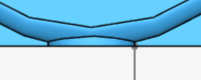
As for the wheel area, I think this tutorial best represents how the point of contact with the ground should rather be defined to avoid any divergence issues, as follows: