Although I have followed several recommended steps during the simulation setup—such as improving mesh quality, adjusting relaxation factors, modifying the boundary layer, lowering the solver time step, and applying other refinements—the residuals from my Conjugate Heat Transfer (CHT) simulation still show significant oscillations and fail to reach the 1e-3 convergence threshold. As shown in the residual plot (Figure X), several key variables continue to fluctuate and do not exhibit a stable convergence trend.
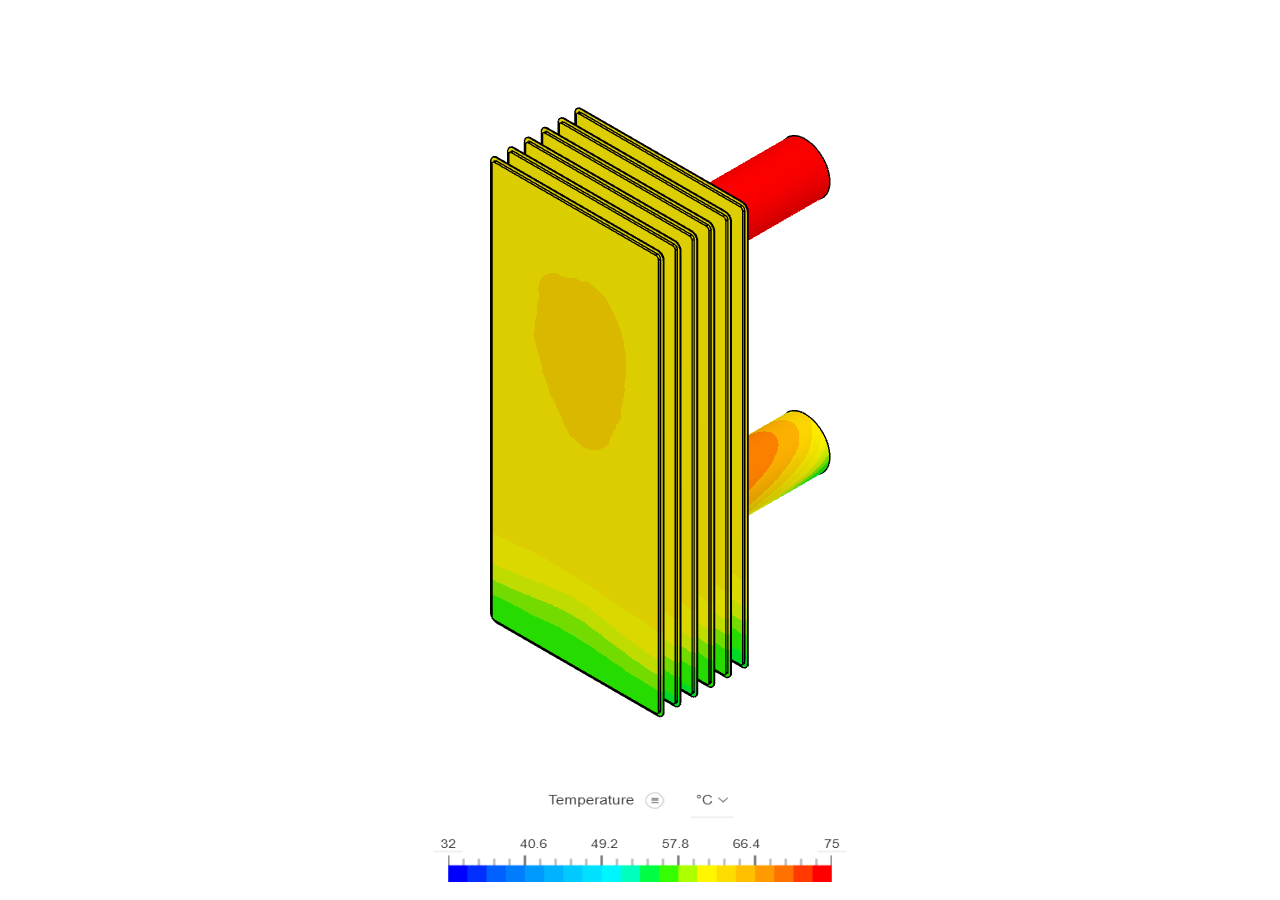
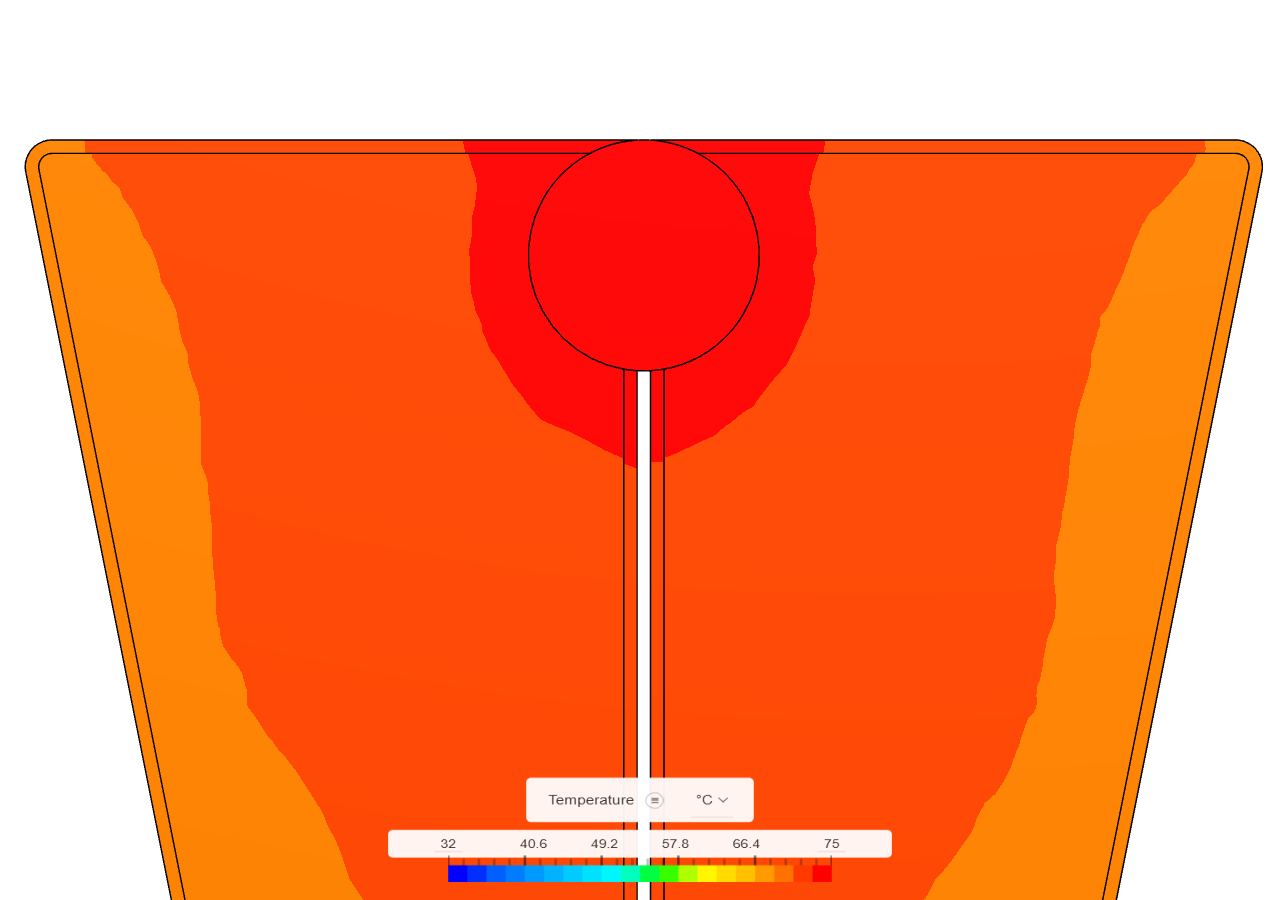
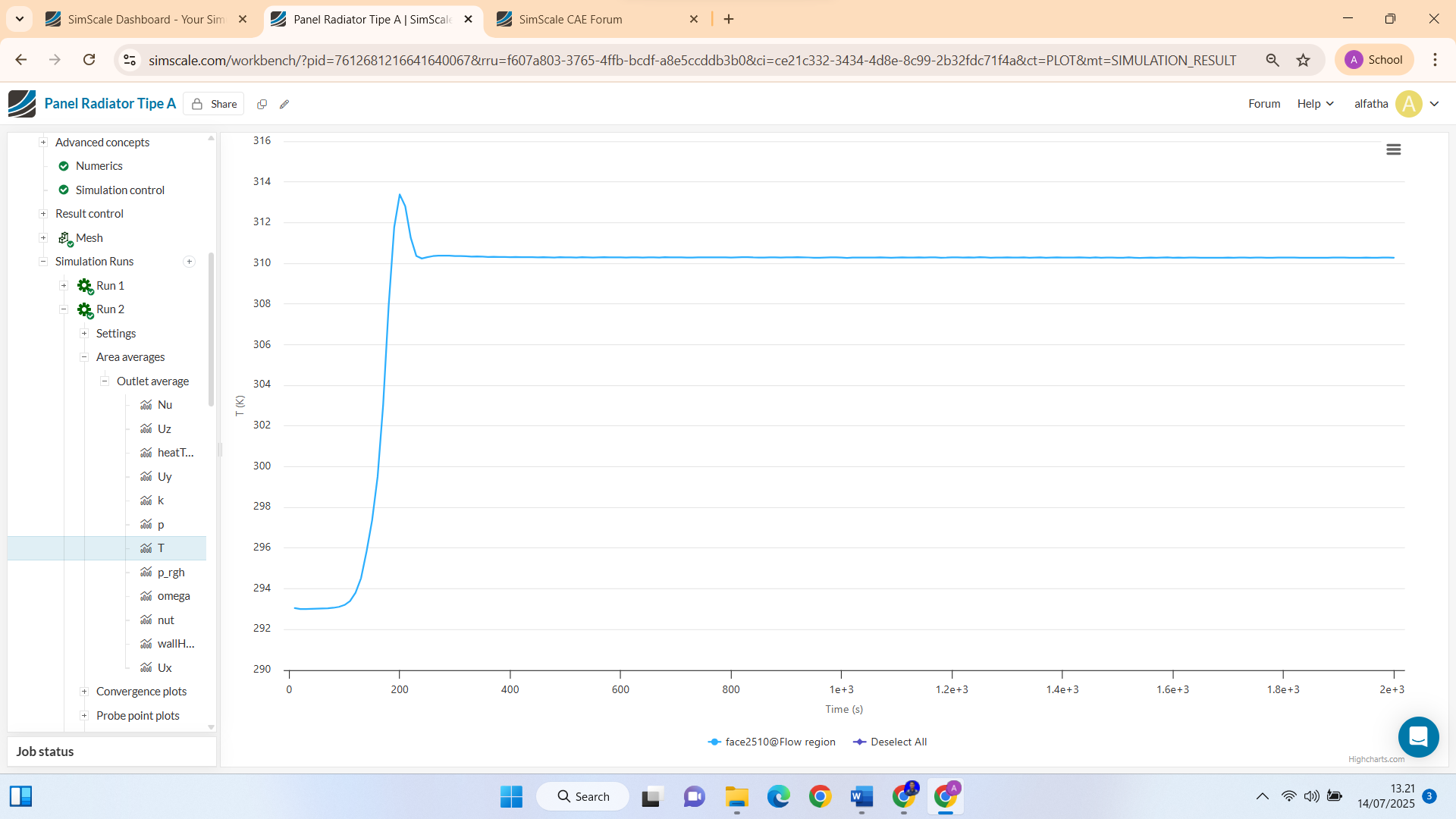
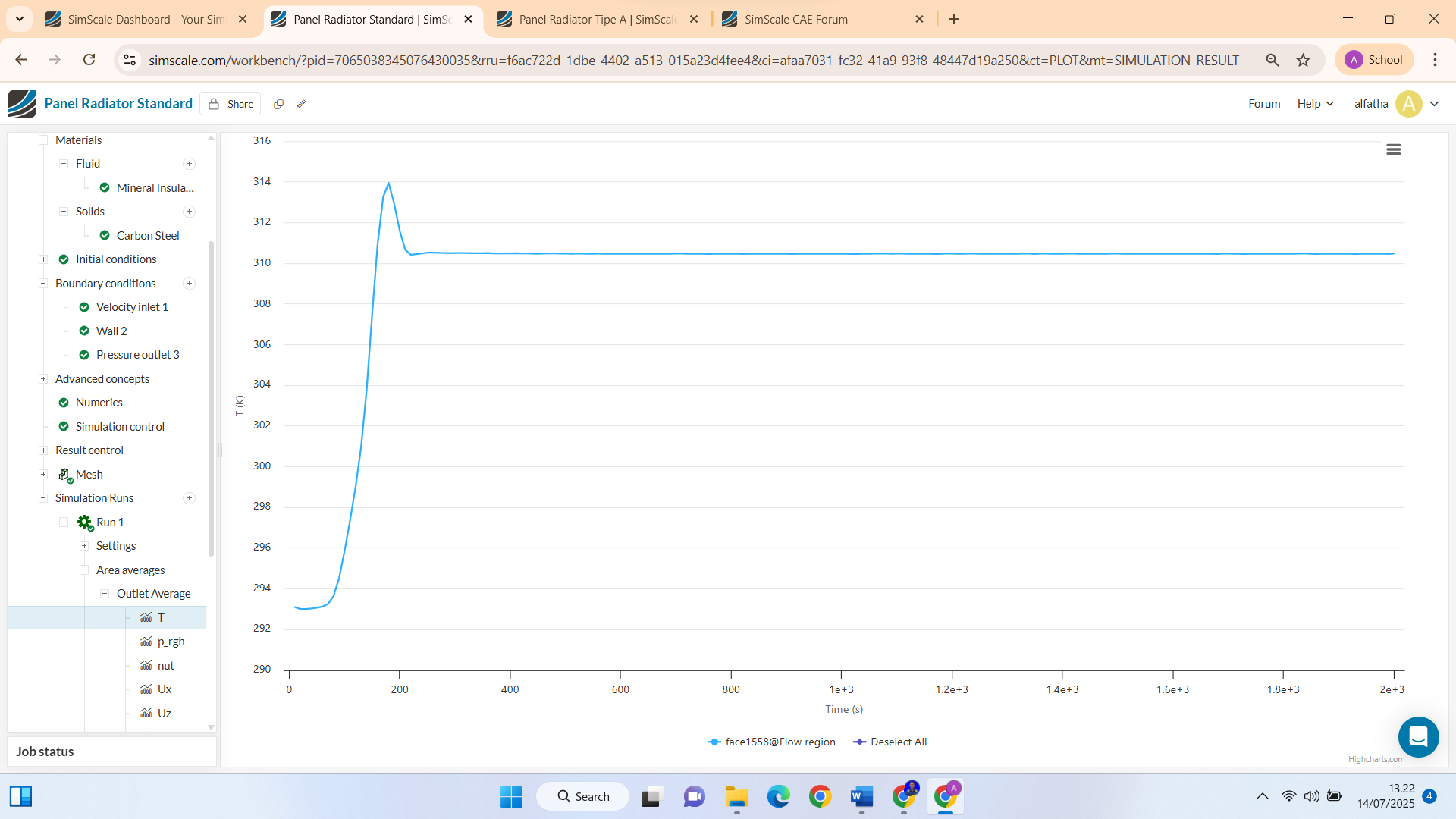
In addition, I have encountered inconsistencies between the temperature contour plots and the quantitative outlet data from area averages. Visually, the temperature distributions across the three radiator designs show noticeable differences, yet the area average plots of outlet temperature return very similar values. This raises concerns about the sensitivity and accuracy of using area averages to distinguish the thermal performance of each design.
I am also aiming to obtain the Nusselt number as a key parameter to evaluate convective heat transfer performance on the radiator wall surfaces. However, I have not been able to extract the Nusselt number directly, despite already adding probe points and using the field calculation feature for convective wall heat flux. The expected Nusselt values are not displayed or available in the output, making it difficult to carry out a more quantitative analysis of heat transfer efficiency for each design.
Questions and Requests for Guidance:
- What additional steps can I take to minimize the residual oscillations and achieve more stable convergence?
- Is there a more accurate or sensitive method to compare outlet thermal performance between designs besides using area averages?
- Could the discrepancy between temperature contours and area average results be due to improper surface selection, insufficient mesh resolution near the outlet, or uneven temperature gradients?
- How can I correctly obtain the Nusselt number from CHT simulation results in SimScale? Is there a specific configuration that I need to enable or a manual calculation method I can apply using available field data?
I would sincerely appreciate any guidance or suggestions from those with more experience so I can obtain simulation results that are more optimal, stable, and physically accurate.
Hi,
This is an interesting topic. As far as convergence goes, my personal opinion is:
- The main aspect is monitoring result controls, as they are directly related to physical quantities of interest that you have, and the result control data is available for all iterations
- Looking at the results in the post-processor helps you to spot unphysical/highly unexpected behaviors (e.g. unphysical velocities, weird flow patterns, undeveloped flow, and more). So looking thoroughly at simulation results is a good idea for increasing your confidence in the results
- Residuals can give you an idea of whether a simulation is stable or not and, to some extent, can help with convergence assessment. From a practical perspective, especially if you are not looking at anything else such as result controls, residuals are bad convergence indicators.
This idea that you brought of up residuals having to drop 3 orders of magnitude is something that you see more often in academia-related activities. However this has some potential issues:
- Residuals plots show normalized residuals and different solvers may normalize residuals differently
- Since residuals are normalized, if the initial condition happens to have a somewhat low raw residual, you will have trouble reducing that by 3 orders of magnitude no matter what you do. Conversely, if raw residuals are very high, you may reduce many orders of magnitude of the raw residual but still have a badly converged solution
- Real life engineering problems are much more complex than academia problems. CAD models are more complex (and usually dirtier), there are more physics in play, etc.
- Having a residual drop X orders of magnitude does not guarantee that your quantities of interest have converged. I have seen simulations where all residuals were < 1e-7 but my quantities of interest were still shifting, and I have also seen cases where the residual for p was around 1e-1 but my quantities of interest were completely flat
- Residuals may vary greatly based on mesh, numerical schemes, timestep size
- A sudden jump in residuals (e.g. a 100x jump) is a good indication of divergence
- Residuals that are mostly flat with some minor/rapid fluctuations may indicate some localized transient effects or potentially some mesh-related aspect
All in all, purely looking at residuals does not work. You should still look at them, of course, but result controls are more important.
Regarding Nusselt number: see this page Field Calculations | Result Control | SimScale
Cheers