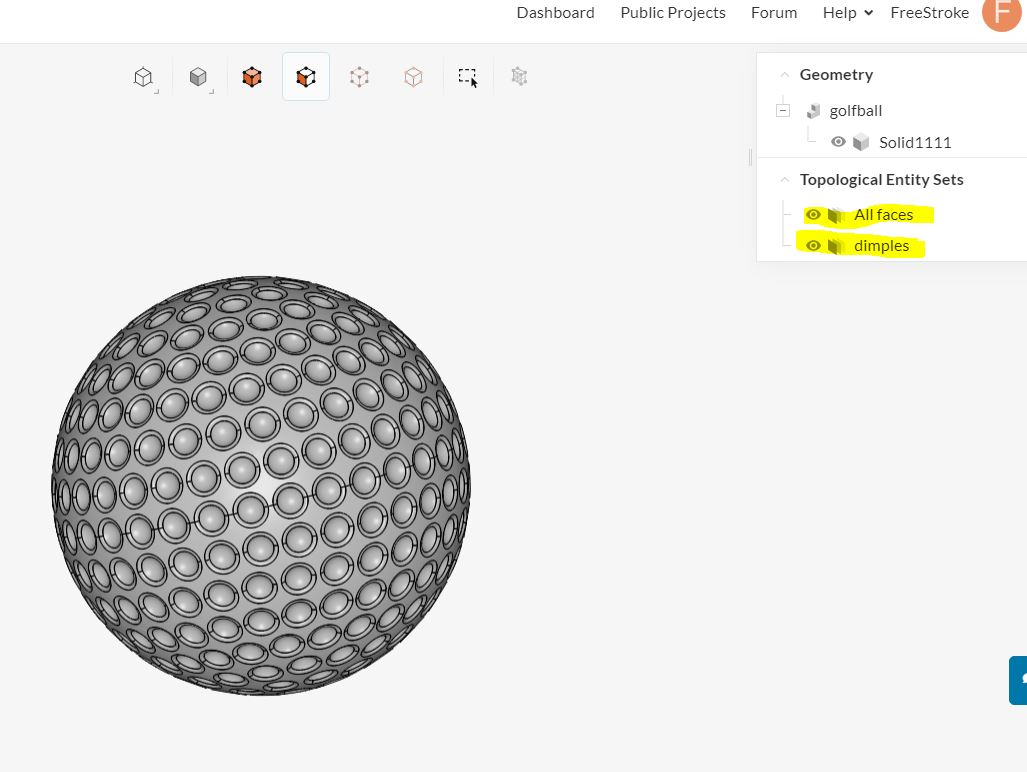
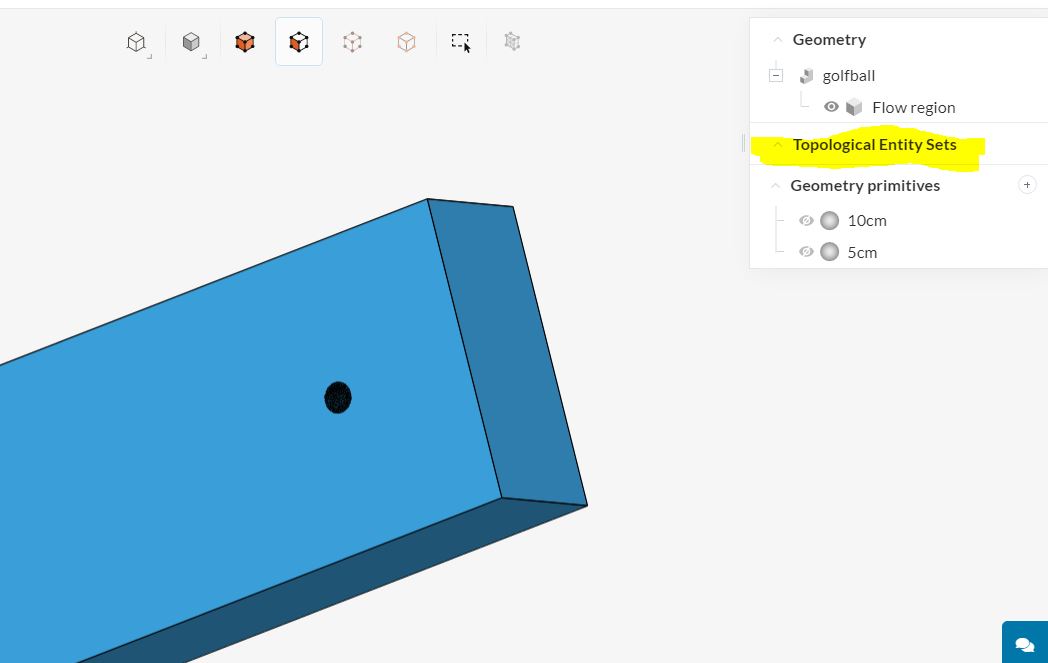
Without the topological entity of the ball’s surfaces I can’t finish the final boundary conditions for rotation. I first noticed this for another project I was doing for a wing section, where I couldn’t include the no-slip wall of the foil surfaces. That’s why I imported this tutorial to figure out what I was doing wrong. However I have the same issue when following this tutorial.
S0, I copied the SOLVED tutorial for the golfball ;
And the topological entities are there. But, when I delete the enclosure results and re-run the geometry operation, they disappear for me. I can’t seem to create the geometry enclosure and preserve topological entity sets that I pre-defined. Can you help point out what I am doing wrong?
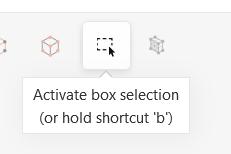
I previously had this issue as well. While I dont have a full solution, a workaround I do is to do area selection. Simply hide all the bounding walls and use the selection box to select all the faces.
Thanks for the suggestion; that’s how I selected the faces on the original model of the ball. Once the enclosure geometry is generated however, the model of the ball is removed as well as those topological entities, so only the created fluid enclosure remains. So the “faces” seen in the model are now the negatives, and belong to the fluid. Of course, there is a toggle option in the geometry enclosure dialogue box to “Keep existing parts”, but then the CFD analysis will have a volume of fluid AND the existing part to mesh and solve for. According to the tutorial, the only way to maintain reference to the surfaces of the original part (ie golfball) is to pre-define these topological entity sets before generating the enclosed volume of fluid. That’s where I am stuck.
I’m having this same problem… did you find a solution to this? I found a sample project that somehow has preserved the geometry. But every time I try the same operation, I’m left with the just the enclosure and no way to proceed from there.
As a short note, the tutorial has been updated since the creation of this post. The section 1.3 goes over the steps to create the necessary topological entity set.