Hi @ggiraldof ,
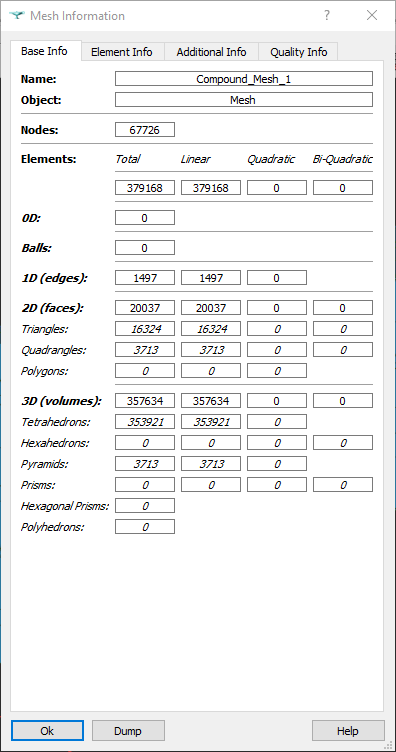
Thanks for asking. No, I haven’t and it could be a good starting point but, first, let me give you some information regarding the mesh. The mesh has been created in Salome and imported to Simscale, not without problems, as it is stated in this other thread. The mesh is made of tets, except for the region of contact between both solids, where I defined the interface to be made of squares to make it even more structured. Actually, both parts of the interface have been meshed with the same parameters so that the contact interface is “quasi-conformal” (if this word exists… ). This point is important as I mention in the other thread which link I already posted above. This gives an interface made up of pyramids instead of tets, not sure if it can be causing the problem (or part of it), but investigating the mesh I found something interesting regarding the pyramids that I will mention later.
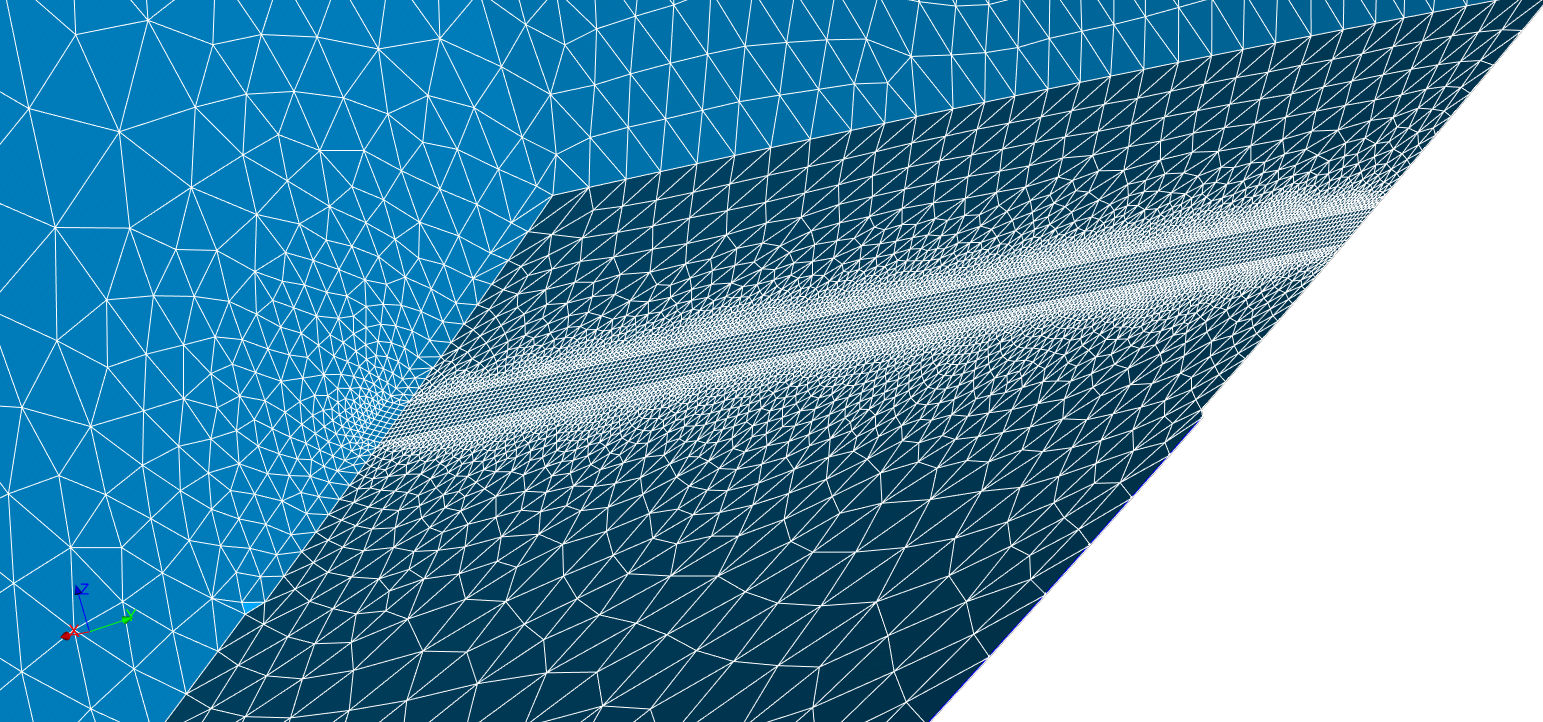
Now let’s go to see the mesh in detail. Below some pictures will tell you more about the mesh than I can write!
The mesh
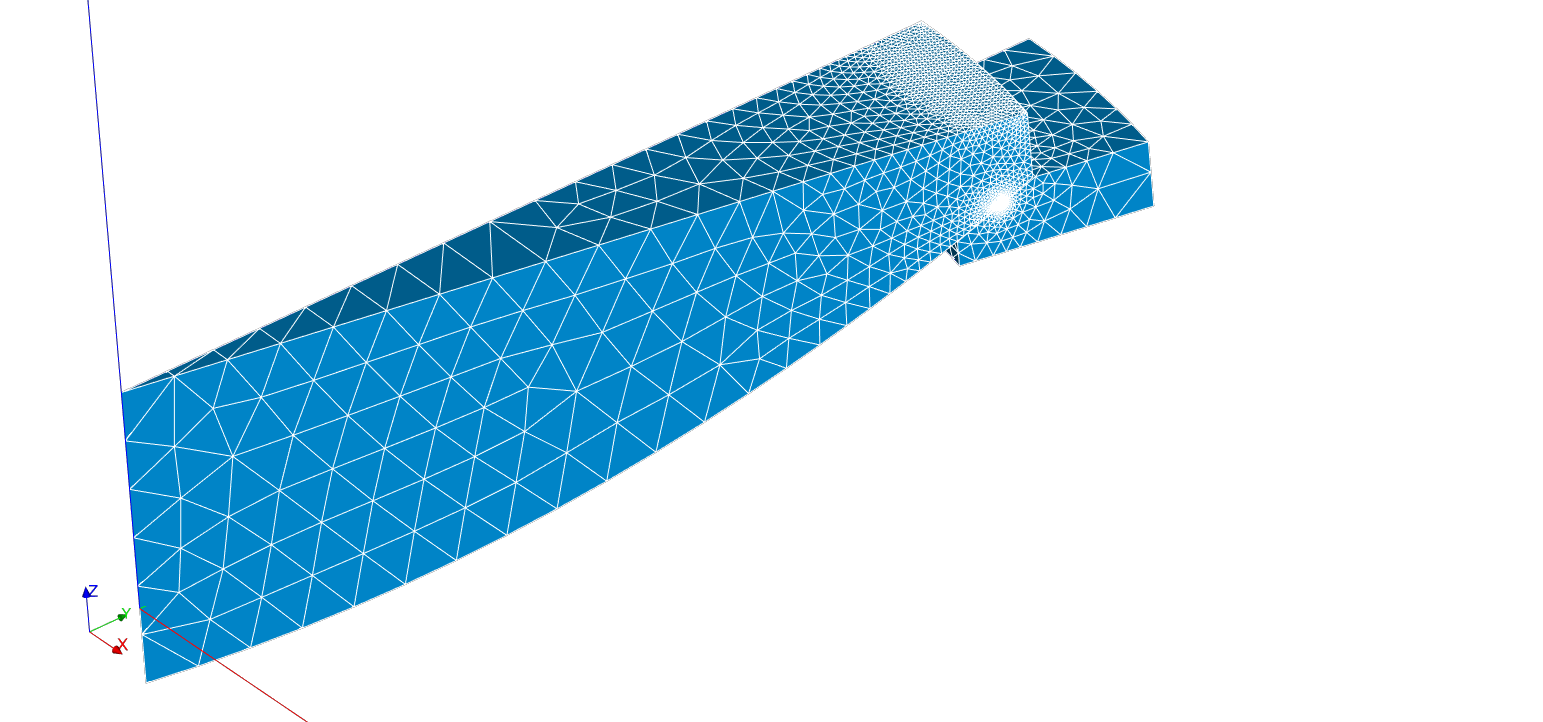
Detail of the mesh of the lens in the area of contact
Mesh information
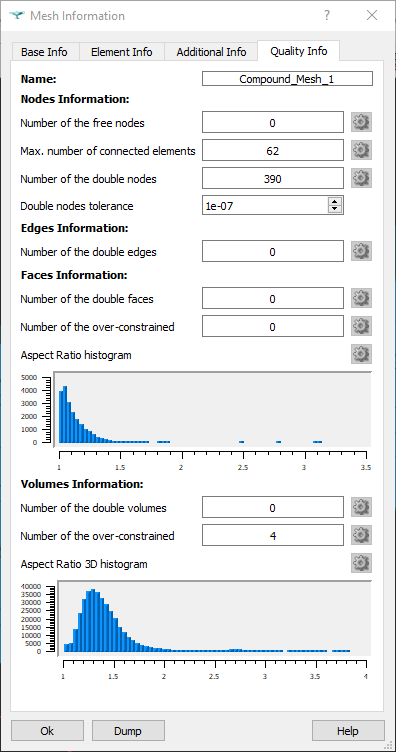
I think the histogram says that the mesh is of reasonable quality. However, to have a closer look into it I grouped all the volumes with an Aspect Ratio 3D greater than 2 and the histogram of it looks quite interesting… Let’s see it!
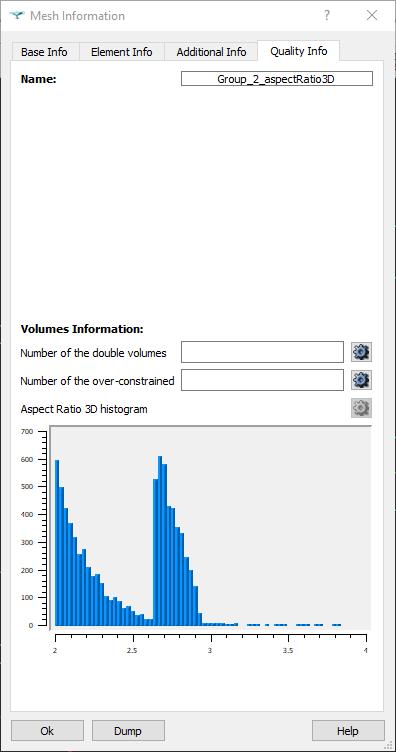
Cutting the group up to an Aspect Ratio 3D of 2.64 one can see the following.
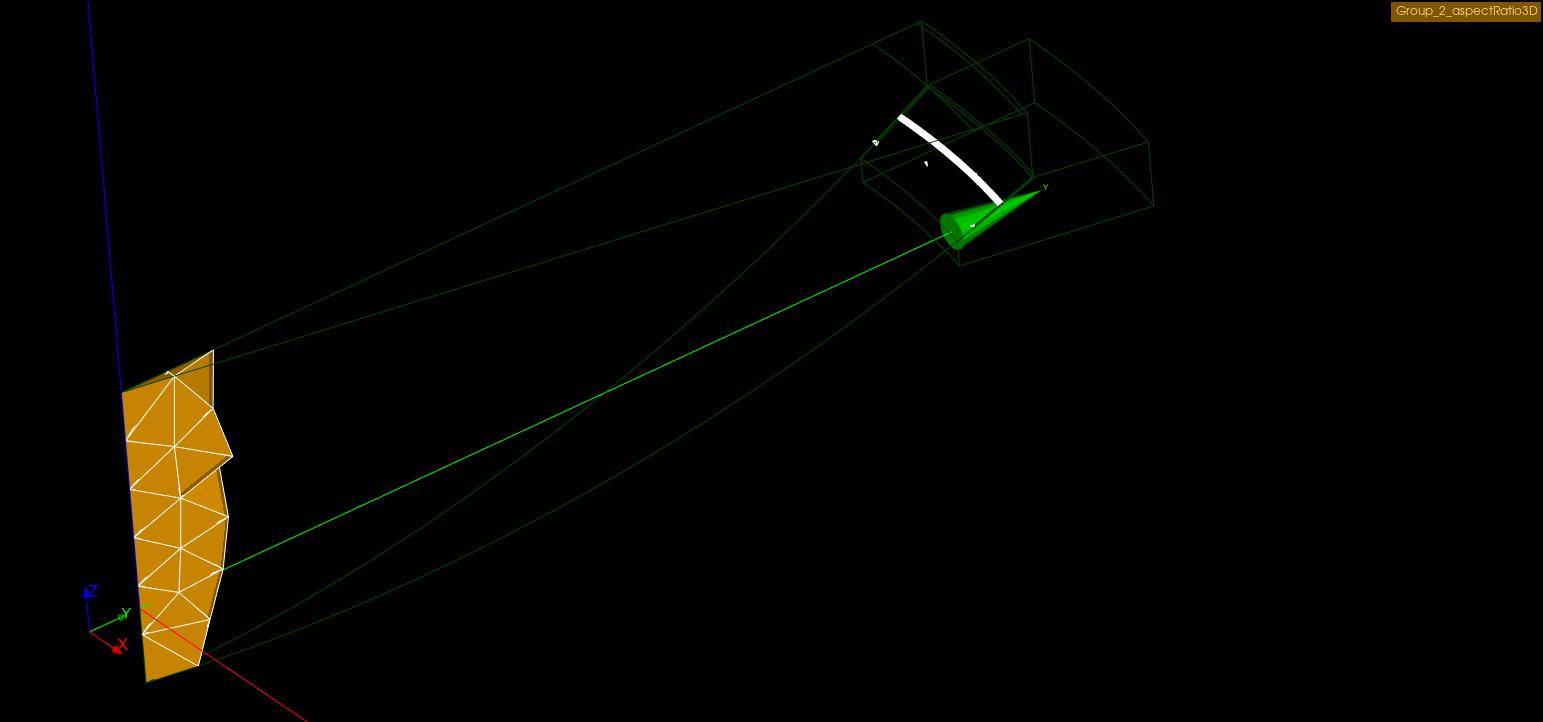
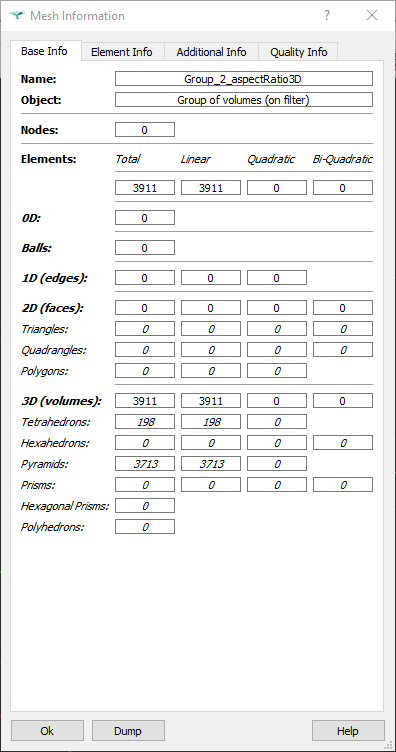
Only ALL the pyramids and some degenerated tets are showing up and it makes me wonder if 2.64 is the lower bound for the aspect ratio of a pyramid, is it?
Now that you know better my mesh, what changes to the mesh you recomend me in order to perform the mesh sensitivity analysis?
Just to give you more information, in a previous simulation with exactly the same geometry but meshed in the standard mesher (unstructured mesh, especially in the contact interface) I got non-orthogonal principal vectors aswell. Right now I am analyzing the previous simulation in the same manner I did with the mesh built in Salome, but, so far it seems that the location of the non-orthogonal principal vectors is alike. I will give you more information once I finish the analysis.
Thanks.
Best,
Alex