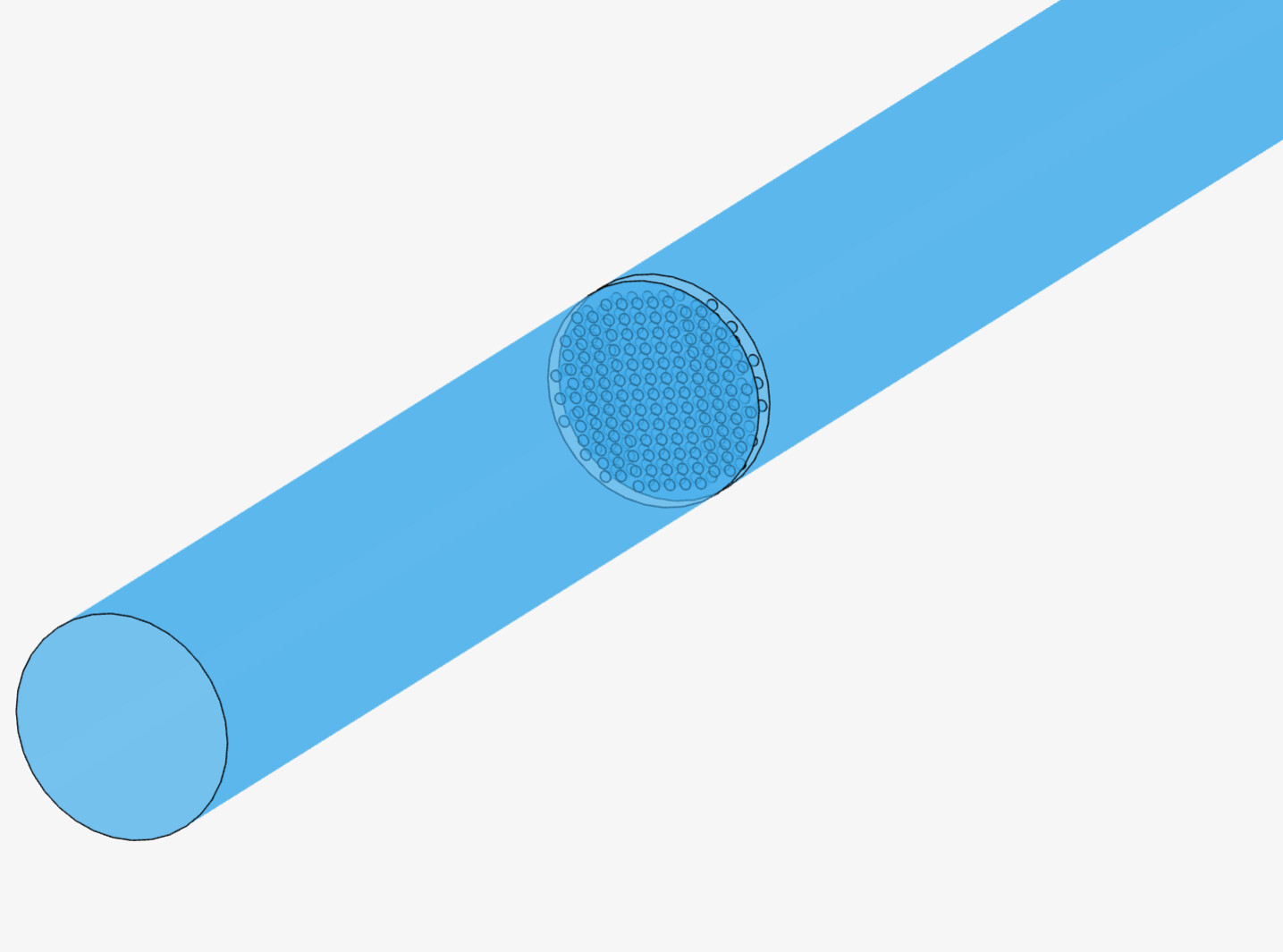
What is the ‘Free area ratio’ in Perforated Plate? Is this the Optical or the Aerodynamic Porosity number?
See for the difference (Figure 8): Gonzales, Howell B. et al.: Porosity and drag determination of a single-row vegetative barrier (Maclura pomifera). In: Transactions of the ASABE 61 (2018), issue 2, pp. 641-652.
I would have thought that in CFD one uses the Aerodynamic Porosity, but if I look at the info around Perforated Plate’s Porosity I see that it is the ‘Free area ratio’ (which sounds very optical;-).
<I ask it because my simulates come closer to measurements in the field when using Aerodynamic Porosity (derived from the Optical Porosity>
Thanks for your help.