
Hello everyone,
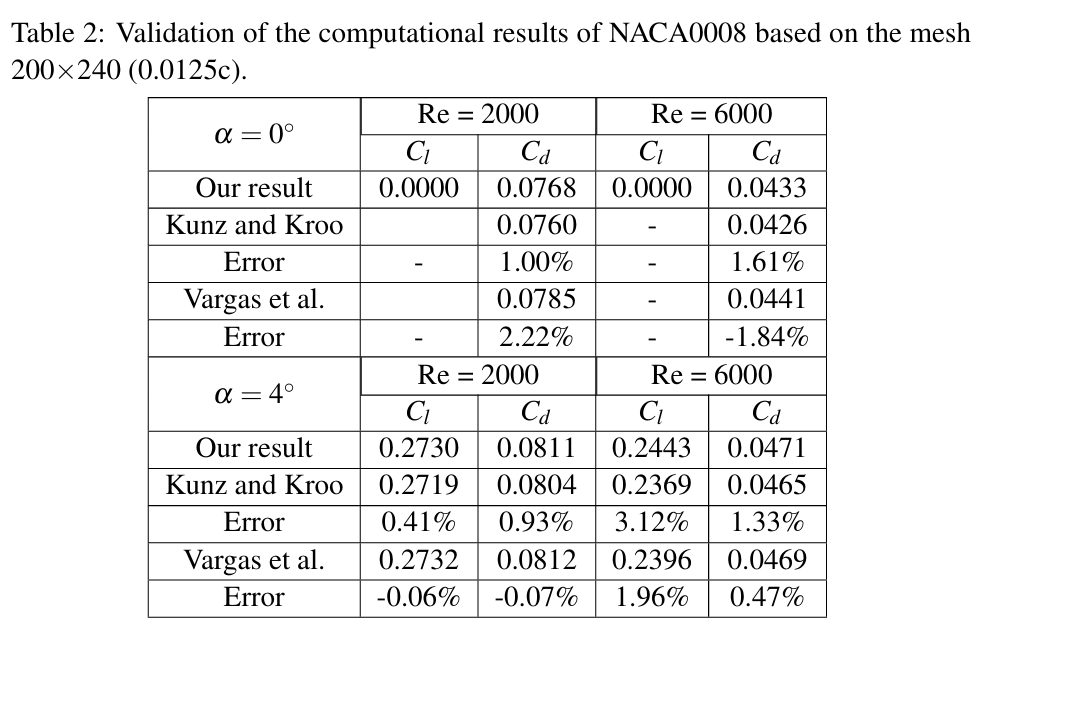
I recreated the NACA0008 profile based on a dataset from UIUC and the result has a 0.2% error with the theoretical value from Vergas et al. (photo 1), when it is under an aoa of 0 degree, and Re of 2000.
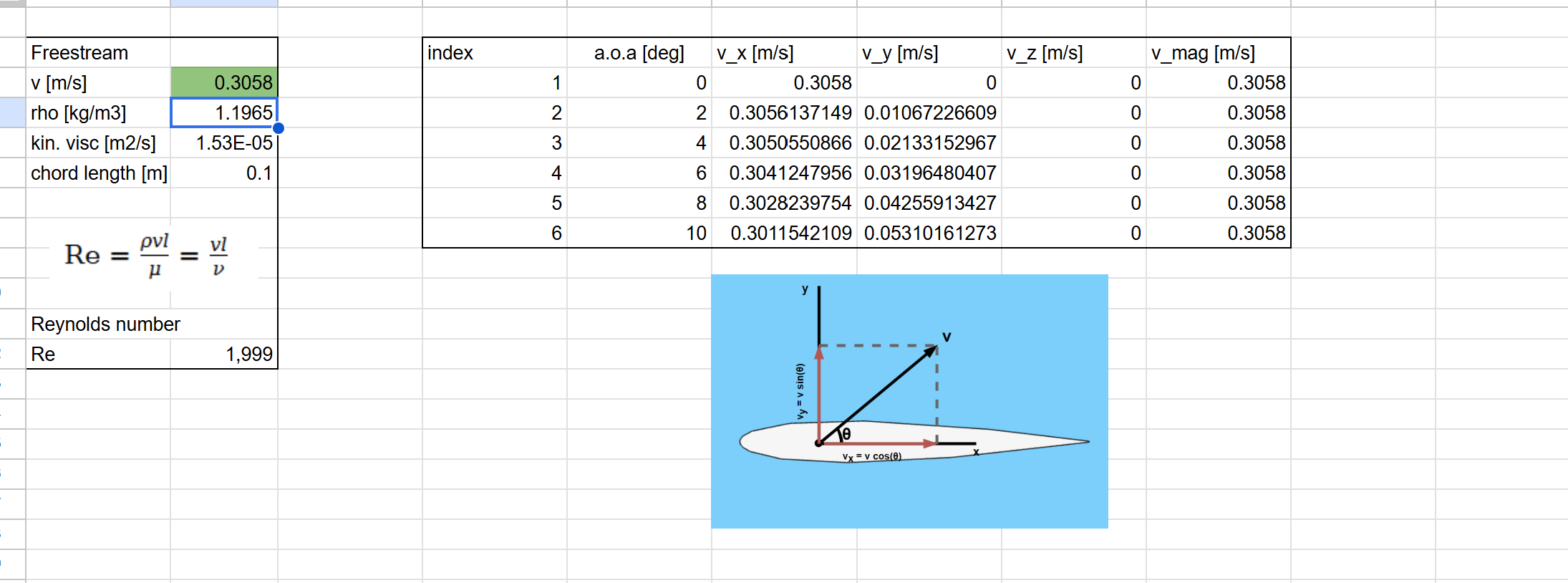
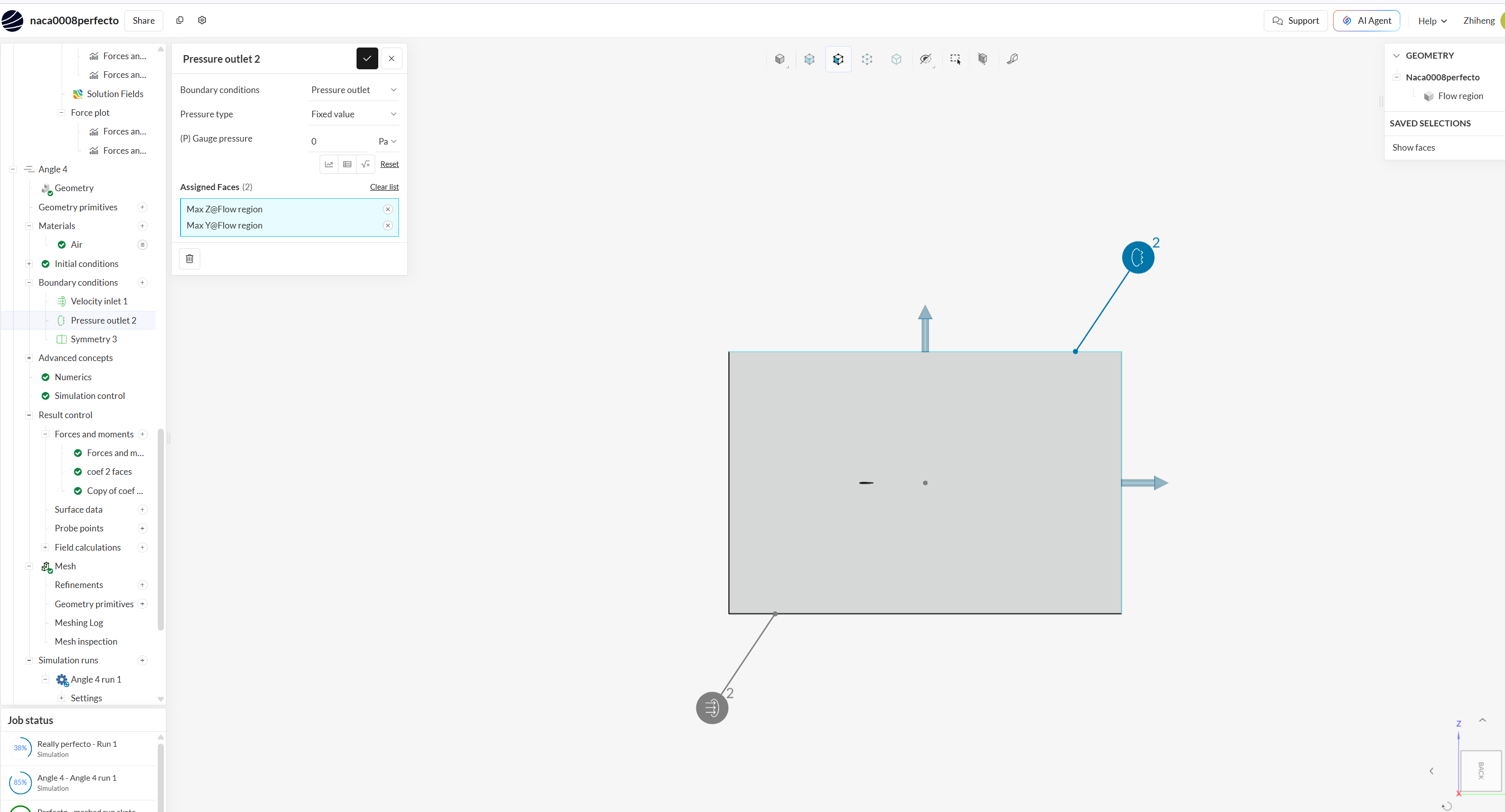
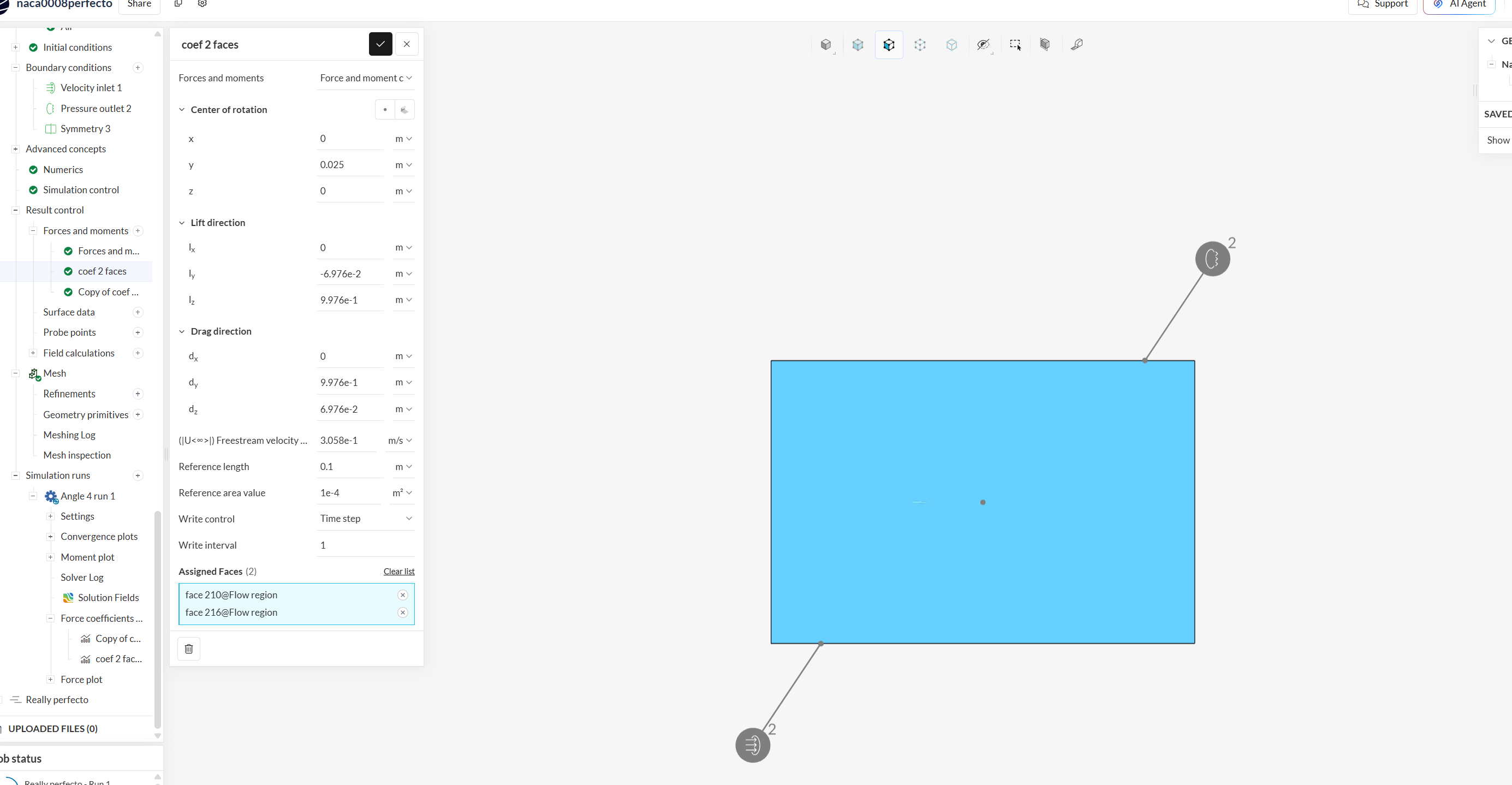
However, when I try with an aoa of 4 degrees, with the same model and the same meshing, the coefficients are not at all correct. I adjusted all the components by following an article called “Parametric angle of attack (aoa) study for airfoil lift and drag calculation” on the SimScale forum and used the results from its calculator (photo 2), and the coefficient of lift (around 0.0355) is incorrect but it is pretty good for drag (0.0806). Here are my settings and relevant photos. I would really appreciate any kind of help.
Hi Zhiheng,
I know we have already discussed this case in the support chat, but I wanted to also post the main comments and suggestions here so that they are documented in the forum thread and may be useful for others as well.
As mentioned in the support chat, I took a closer look at your Re = 4000, AoA = 4° case. From what I can see, the lift and drag coefficient setup itself looks correct. The lift and drag direction vectors are consistent with a 4° freestream angle, and the freestream velocity, reference length, and reference area also appear to be set correctly.
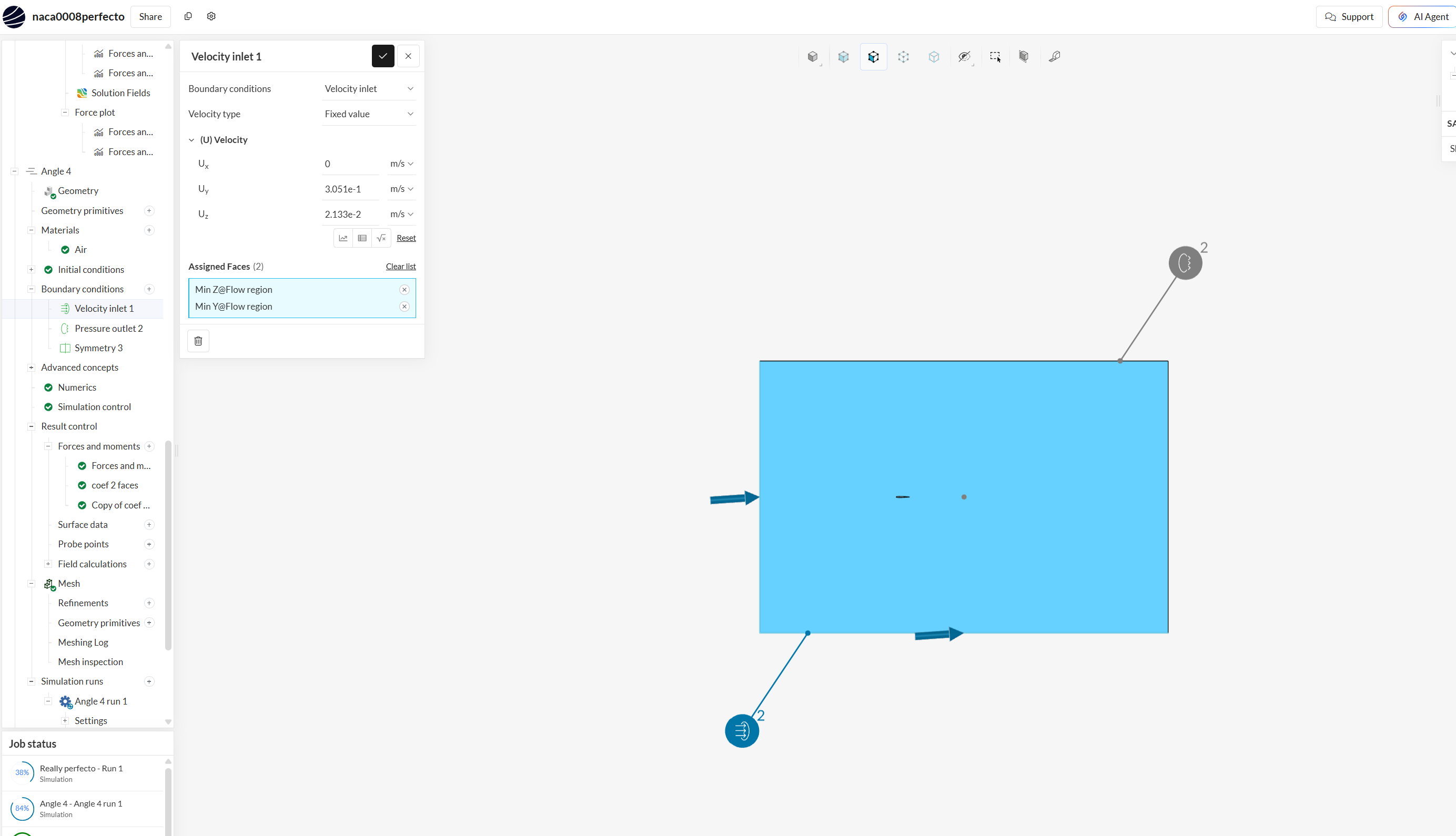
The main point I would investigate further is the treatment of the top and bottom boundaries. They are currently defined as velocity inlets. Since the AoA is introduced by rotating the freestream velocity, the flow also has a vertical component. This means that using simple slip walls there would not be fully appropriate either, but prescribing velocity on both boundaries can constrain the far-field flow and may influence the predicted lift, particularly at these low Reynolds numbers.
As discussed, two cleaner approaches would be:
-
rotate the airfoil by 4° while keeping the freestream horizontal, with a standard inlet/outlet and slip walls on the top and bottom, or
-
keep the airfoil fixed and use an angled freestream, but choose outer boundary conditions that allow the flow to enter and leave the domain appropriately.
I would also double-check the sign of the vertical velocity component to make sure the 4° AoA is applied in the intended direction.
So at this point, I do not see an issue with how CLC_L and CDC_D are being calculated. I would focus first on the outer boundary conditions and then compare the results again.
Thanks,
Bryan