Actually this 0.3 is a ratio of final layer thickness to the dimension of the first cell next to the surface, from that you can figure out how to calculate the final layer thickness in meters. To obtain a good y+ layering I recommend to use a surface refinement with max and min levels set to the same value. like this:
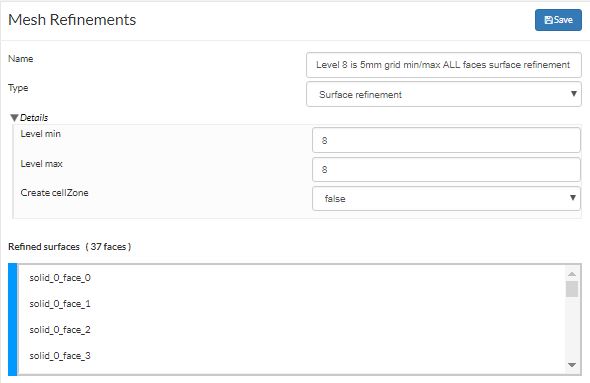
That grid size should be approximately equal to (but greater than) the final layer thickness which you desire. Then you can determine the proper ratio to use based on that grid size. Say you want a final layer of 0.002 meters. Say Level 8 grid is 0.005 meters (a Level 0 grid of 1.28 meters), then you use thickness of final layer ratio of 0.4.
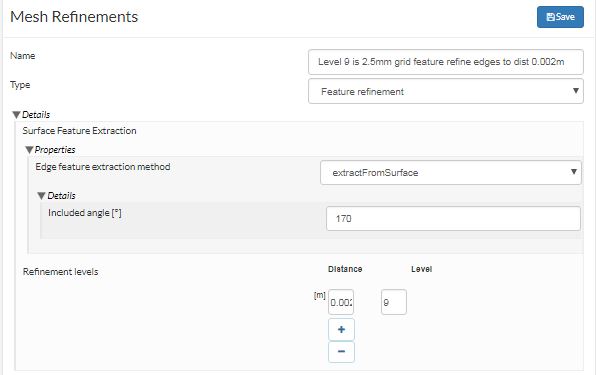
If you need further refinements you can do a feature refinement at level 9 like this to make sure that your surface/face intersections are sharp;
And a further level of refinement on very small surfaces like blunt wing trailing edges like this:
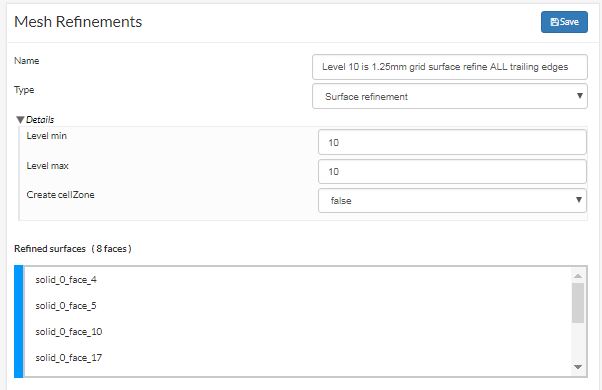
That info was very hard for me to learn as there is no guidance on detailed use of relative layering anywhere I looked.
To make sure that your final desired Y+ is achieved, you need to use the expansion ratio iteratively, by the number of layers you desire, on that final layer thickness (in meters) until you determine the first layer thickness near the surface which should match the ‘estimated wall distance’ (EWD) output of the online y+ calculator. Vary your final layer thickness RATIO accordingly so that your first layer matches EWD where those Level 8 cells were created on the faces. If you have to go below 0.2 or so with that ratio, then I would say that you should do your ALL faces surface refinement one level finer.
I am not sure of the relative layer settings that were in the project, I deleted that project yesterday. I just took these screen captures from another project of mine.
P.S. Make sure to use a ‘square’ grid on all faces of your background mesh box for the above recommendations to be accurate. Also, make sure that your background mesh box is large enough so that its walls do not affect the flow around the geometry (you can optimize these box sizes later but a good place to start is at least 4Xgeomtery dimension in each axis). And likely you would need a cartesian refinement box (sized about 2Xgeometry bounding box dimensions) around your geometry refined to about level 5 if you use the 1.28 meter level 0 grid that I have grown to like)
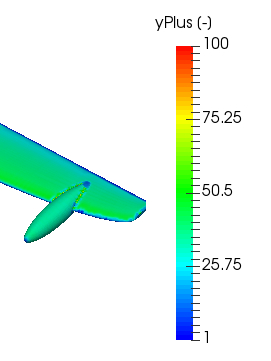
You can eventually get layering yPlus mapping like this where yPlus =50 was desired: