
Hi @kittynotacat, I’ve had some insights I’d like to share with you:
- Regarding your question:
Transient simulations are indeed very expensive, as my colleague @Ricardopg pointed out in your previous forum post. In that sense, if you just want to see the effects of the cooling the fan provides, maybe an alternative would be to try to simulate a smaller model - cut in half let’s say? If that’s not an option considering the results you’re expecting, please disregard
There’s also a great webinar by my colleague Darren on “How To Set Up a Cost-Effective Transient Simulation” that might help 
-
As Ricardo also pointed out, working with STL naturally comes with great difficulties. Your CAD model doesn’t look very complex, is generating a geometry in other format not an option? You could use, for example, OnShape.
-
It seems that you’re assigning the MRF Rotating Zone to a larger region than just the inside
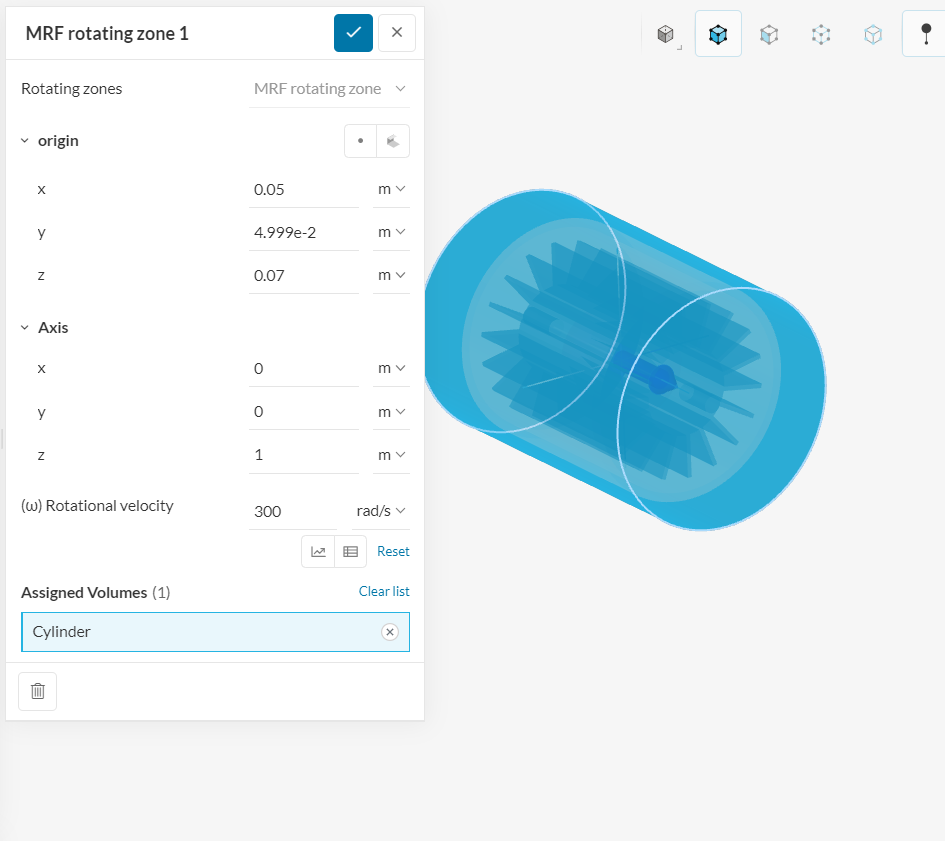
which produces rotating cells outside of it:
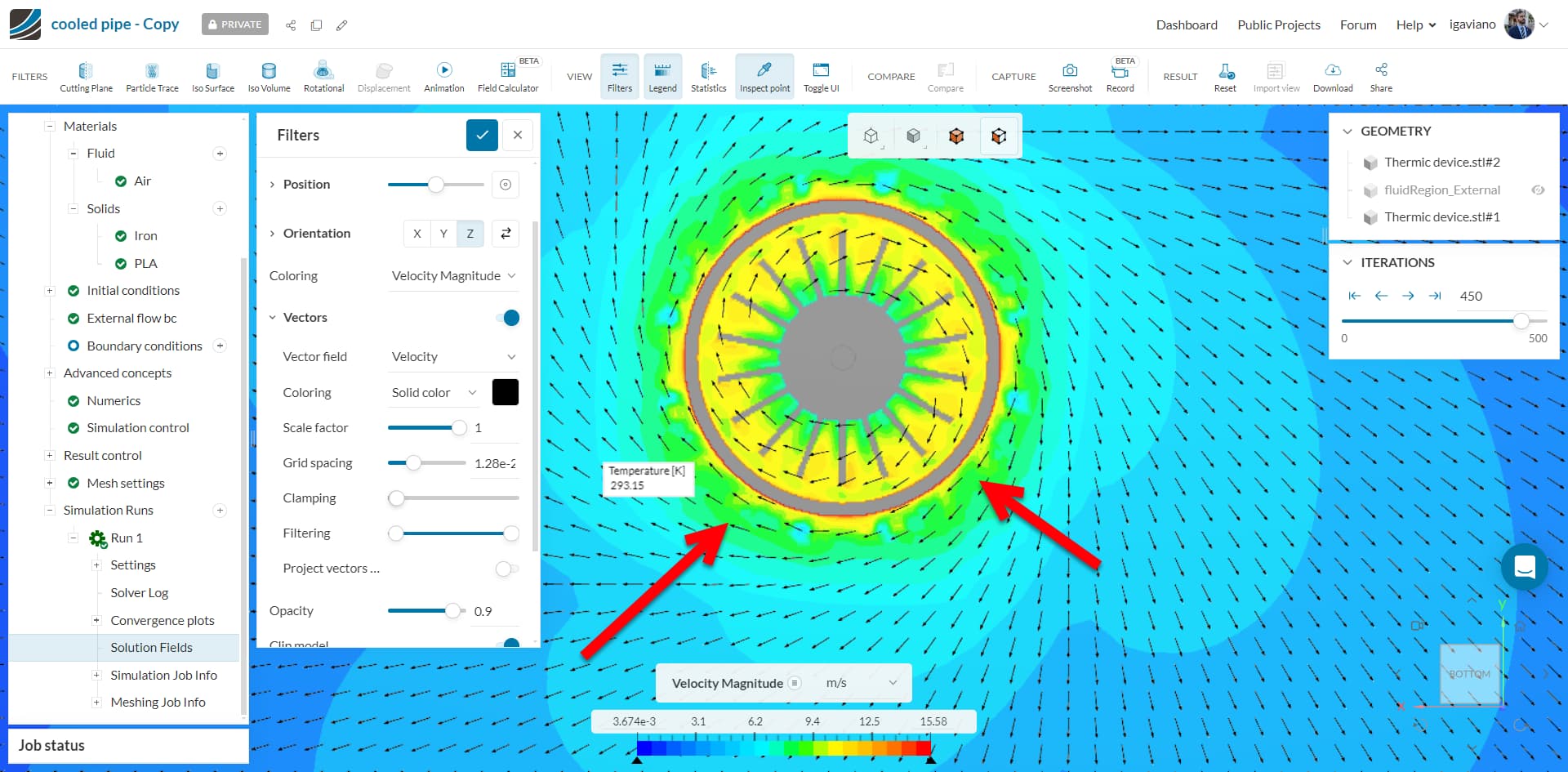
Does that fit with the goal of your simulation?
- Regarding this part:
As Ricardo pointed out, unfortunately for what you’re trying to do a Steady-State simulation wouldn’t be possible. That’s because, independently of the time-step, Steady-State is like the stabilized version of a transient case (in which stabilization occurs) - as if an infinite amount of time had passed.
In that sense, the results will show equilibrium values for temperature, which will be 20 °C since that’s the value you’ve set for the air around your volume:
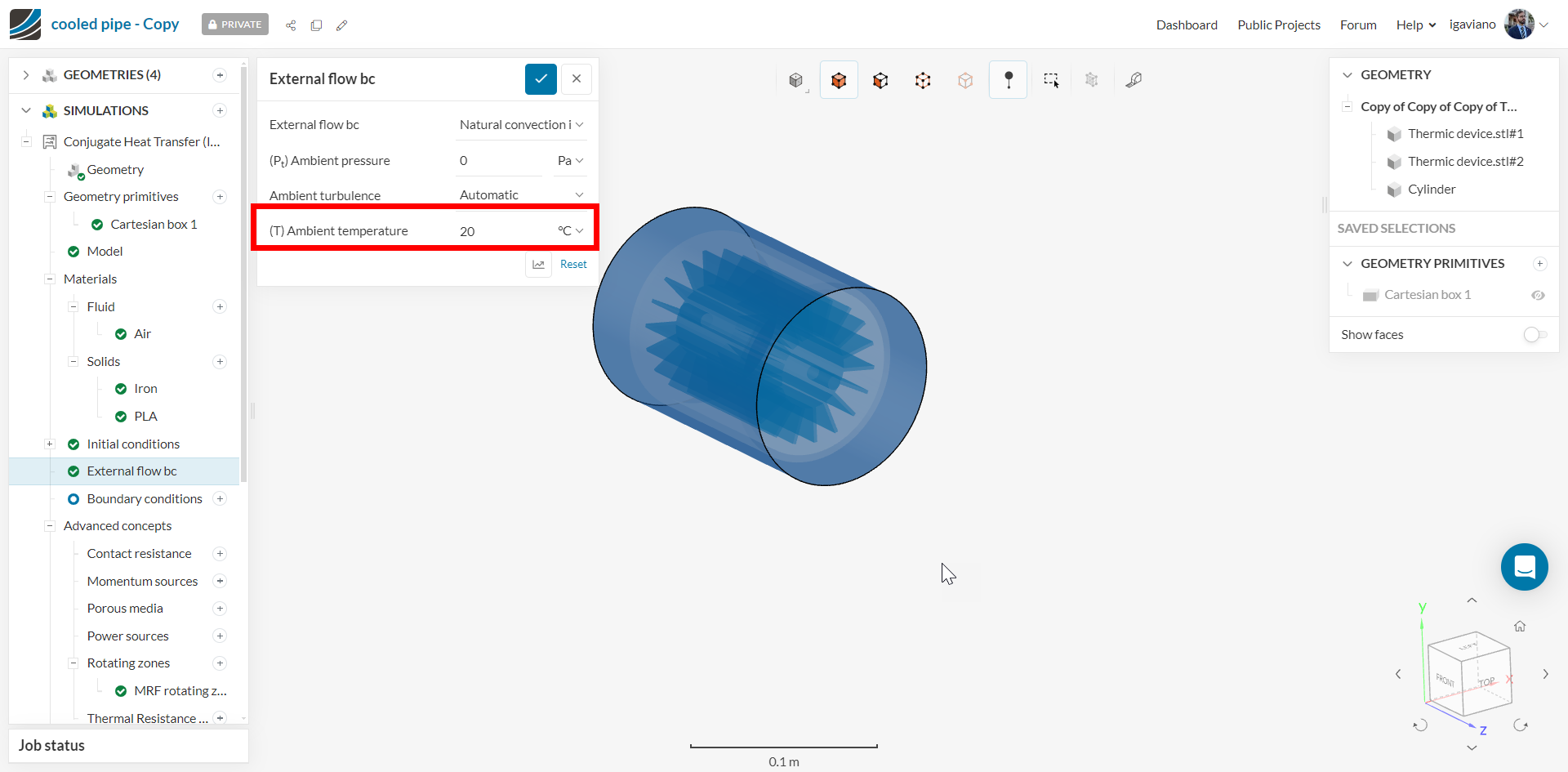
Does that help in any way?
Best,
Igor