
Congratulations, this is a very well set up project!
I think that your residuals are converged as well as you can expect for this mostly separated flow simulation run.
In the future you might reach convergence quicker with Simulation Control>Potential Foam Initialization = ON
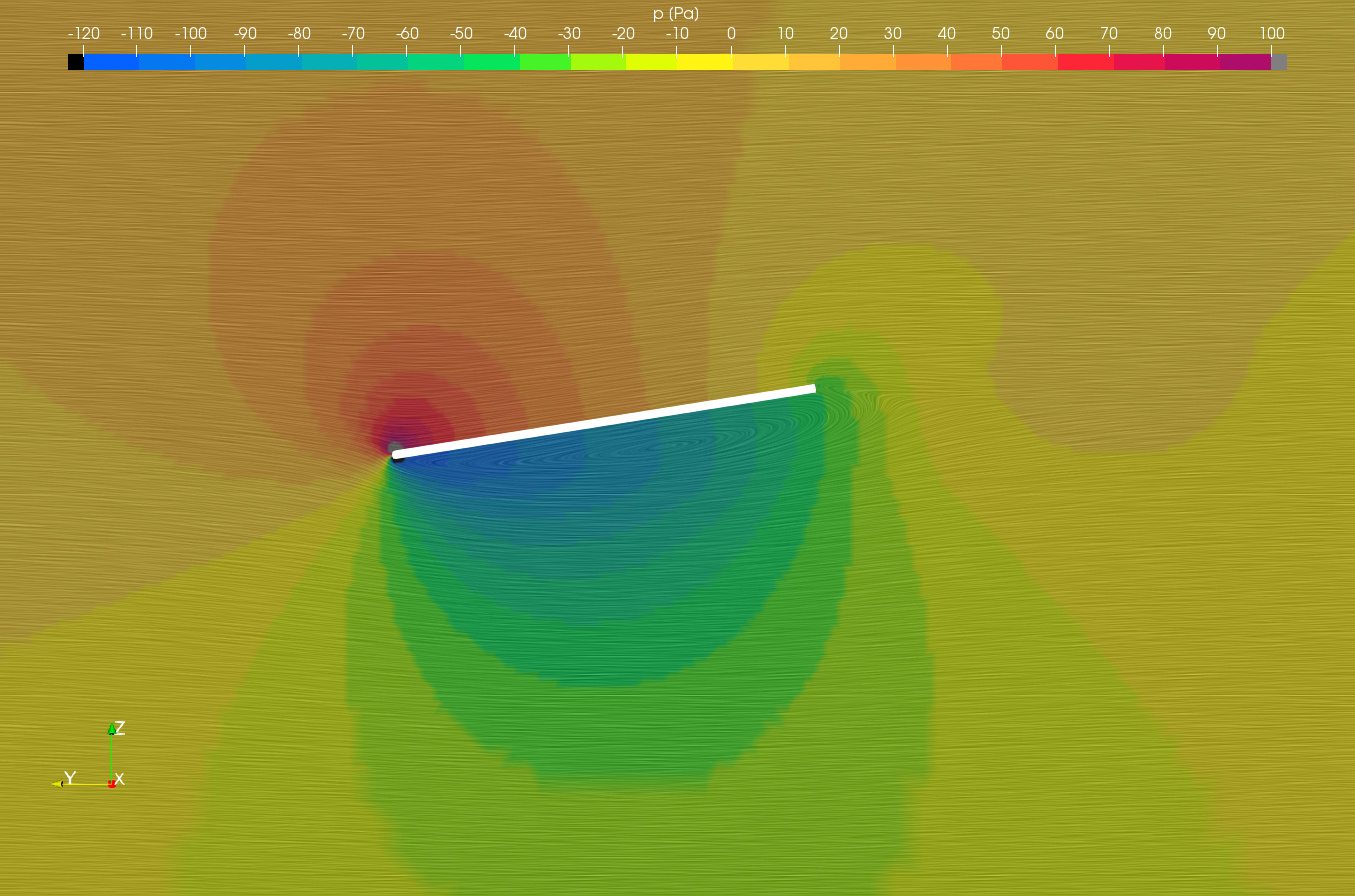
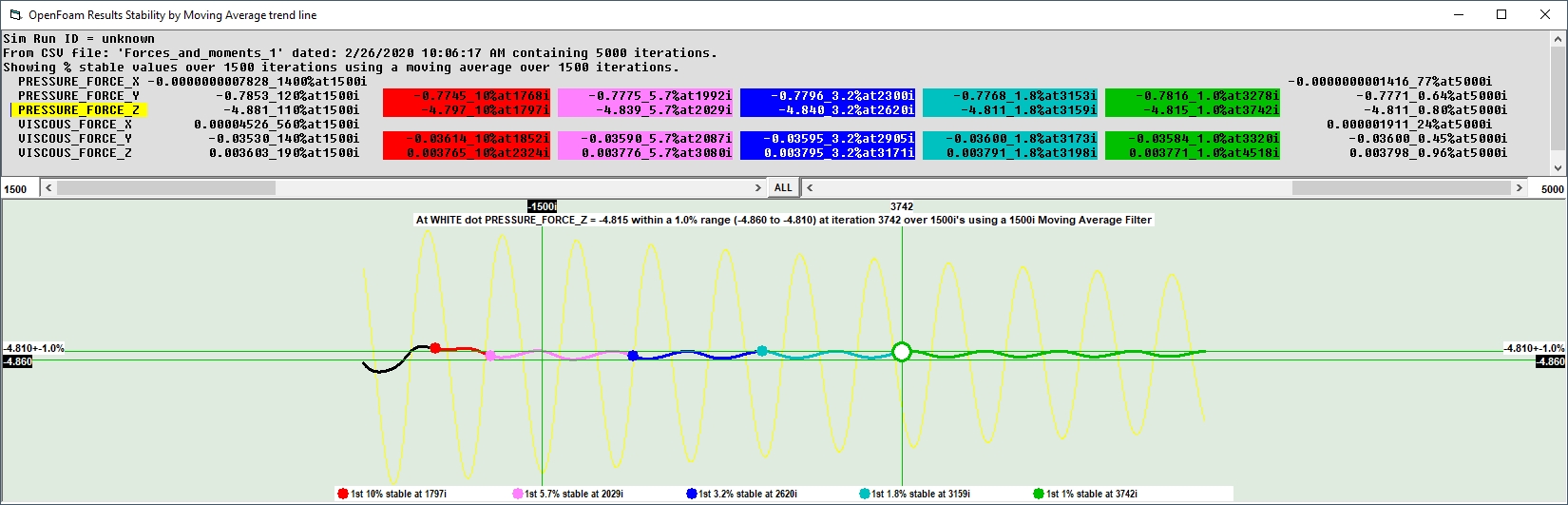
In actuality, your oscillating Forces and Moments Results are oscillating around quite stable values.
In the case of your Pressure Force Z, the value it is oscillating around is -4.815 N and which is 1% stable over 1500 iterations using a 1500 iteration Moving Average filter. This was determine by my ORSI program which you can read about and download here.
Here is an image to show the above program in operation for your Simulation Run results data:
I am sure that you realize this, but the accuracy of your results will be significantly improved if you add boundary layering to your mesh.
By the way, your full solution set download for this sim run was 2.5GB. Since this is a steady state sim run you could lower this 2.5BG download to about 1GB without losing any significant data. If you change your Simulation Control ‘Write Interval’ so that it equals your ‘End Time’, only results for Time 0 and End Time will be saved (~1GB download). Then when you download and unzip the 1GB data for use in ParaView, you can further save 0.5GB of disk space by deleting the Time 0 folder.
Since you have reference values for CL and CD, you should properly setup a ‘Forces and Moments Coefficients’ results item and then we can watch as you try to verify the experimental values with your CFD project  …
…